

On June 12, 2026, the 117th Lecture on the History and Philosophy of Science at Tsinghua University was held in Room B206 of the Meng Minwei Humanities Building. The theme of this lecture was Sven Hedin, Andersson and the Rise of Chinese Archaeology, delivered by Associate Professor Wang Xinchun from the College of History and Culture of Northwest Normal University, and hosted by Assistant Professor Liu Xiao from the Department of the History of Science at Tsinghua University.
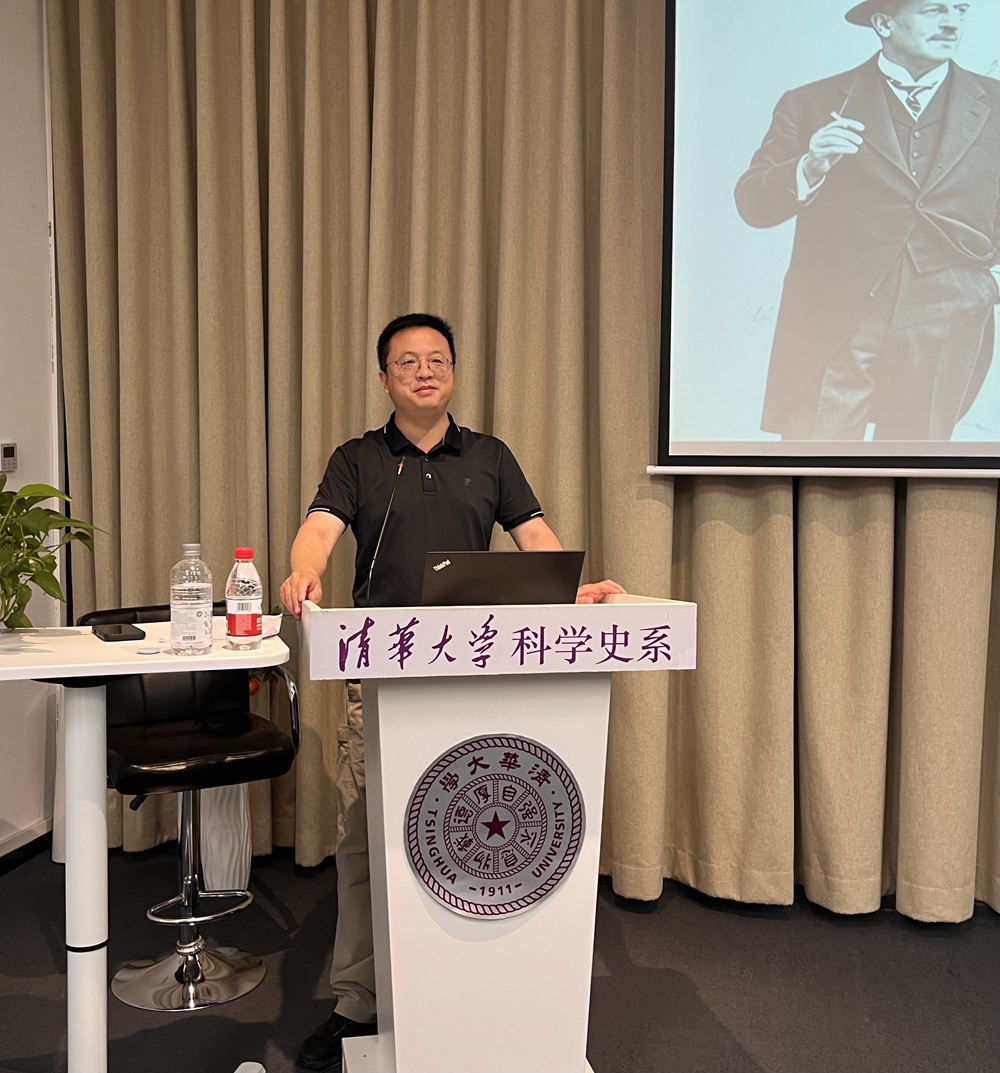
The speaker first sorted out the development process of modern Chinese archaeology, pointing out that the rise of this discipline is closely related to two aspects: first, the archaeological activities carried out by Western explorers in China's border areas, and second, the archaeological work led by the Geological Survey. The deep intersection of these two two veins is inseparable from two closely connected Swedish scholars—archaeologist Johan Gunnar Andersson (1874-1960) and explorer and geographer Sven Hedin (1865-1952). Relying on a large number of archives left by the two, the speaker detailed many details to the audience present: including their experiences of going to China one after another, the archaeological work carried out by Andersson in China, the whole process of the joint initiation of the Sino-Swedish Scientific Expedition to the Northwest by the two, and their cooperation and exchanges after returning to Sweden.
As early as the early 20th century, Sven Hedin had invited Johan Gunnar Andersson to join an expedition. Later, Andersson also invited Hedin to write a scientific research report for the International Geological Congress. In 1914, Andersson officially cooperated with the Geological Survey to carry out geological exploration work. Since then, he shifted his research focus to paleontology and archaeology, and discovered the famous Yangshao Culture in 1921, a achievement that also marked the birth of modern Chinese archaeology. With Andersson being familiar with the situation of all walks of life in China and assisting from there, coupled with the preliminary preparations completed by the visit of the Swedish Crown Prince to China in 1926, and supplemented by funding from Germany, Hedin was finally able to lead the establishment of an expedition team to conduct scientific research in northwest China.
After arriving in China, Hedin soon reached an agreement with the Geological Survey, but just as the expedition was about to start, the plan faced strong opposition from academic circles in Beiping. After repeated consultations, the two sides signed 19 articles of cooperation regulations in April 1927, and the expedition officially kicked off immediately. Andersson played a key mediating role in this mediation. However, in April of the same year, Andersson realized that he had been deceived by Hedin, and also considering that the Geological Survey was virtually excluded from the Sino-Swedish Northwest Scientific Expedition, he finally chose to withdraw from the team and leave Beiping. The archaeological work left by him was subsequently carried forward by Bergman and Arne.
Even after returning to Sweden, Andersson continued to promote the Northwest China expedition. After the German side withdrew from the expedition in April 1928, he took the initiative to secure funding support from the Swedish government for Hedin, enabling the expedition to proceed. In 1931, Andersson proposed to compile a commemorative special issue on Hedin's expeditions and contributions, and thereafter continued to promote the sorting and academic research of Hedin's Central Asian collections.
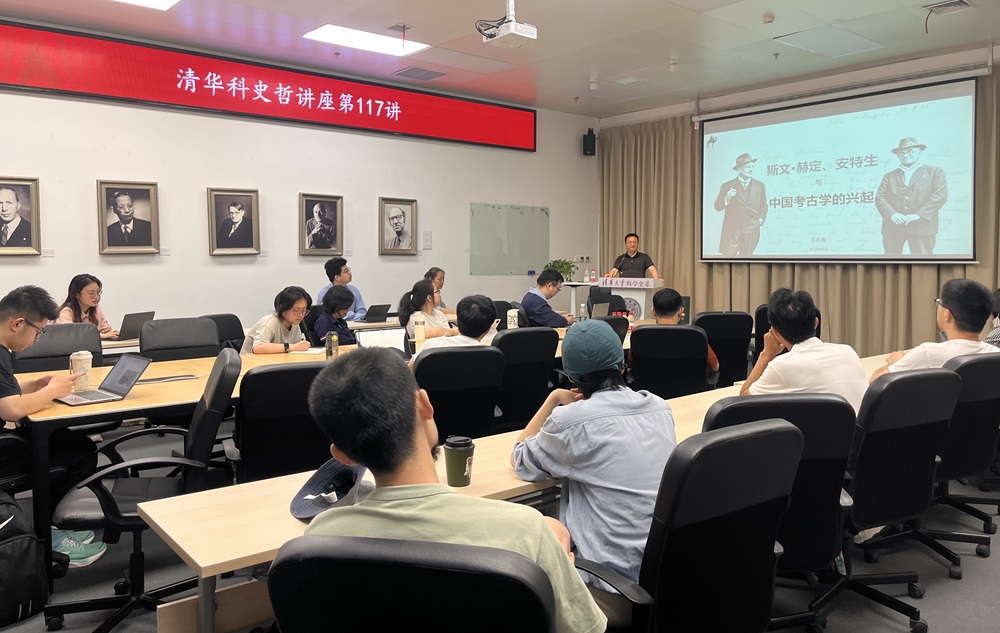
During the interactive Q&A session, the questions raised by the teachers and students present covered multiple directions: how to use artificial intelligence to sort out massive historical materials, the current status of cultural relics related to the Northwest Investigation Group, Sven Hedin's communication experiences with Huang Wenbi and Xu Xusheng, the disciplinary connection between Chinese archaeology and anthropology, as well as the Juyan Han bamboo slips discovered by Bergman and relevant research in epigraphy. Teacher Wang gave detailed answers to each question one by one. The entire lecture concluded successfully with warm applause.
Written by: Li Hongyu
Reviewed by: Liu Xiao