

On May 15, 2026, the 113th lecture of the Tsinghua Colloquium on the History and Philosophy of Science and Technology was successfully held. The theme of this lecture was "Reproduction and Reproducibility in Experimental and Observational Research", and the speaker was Hans Radder, Emeritus Professor of the Vrije Universiteit Amsterdam.
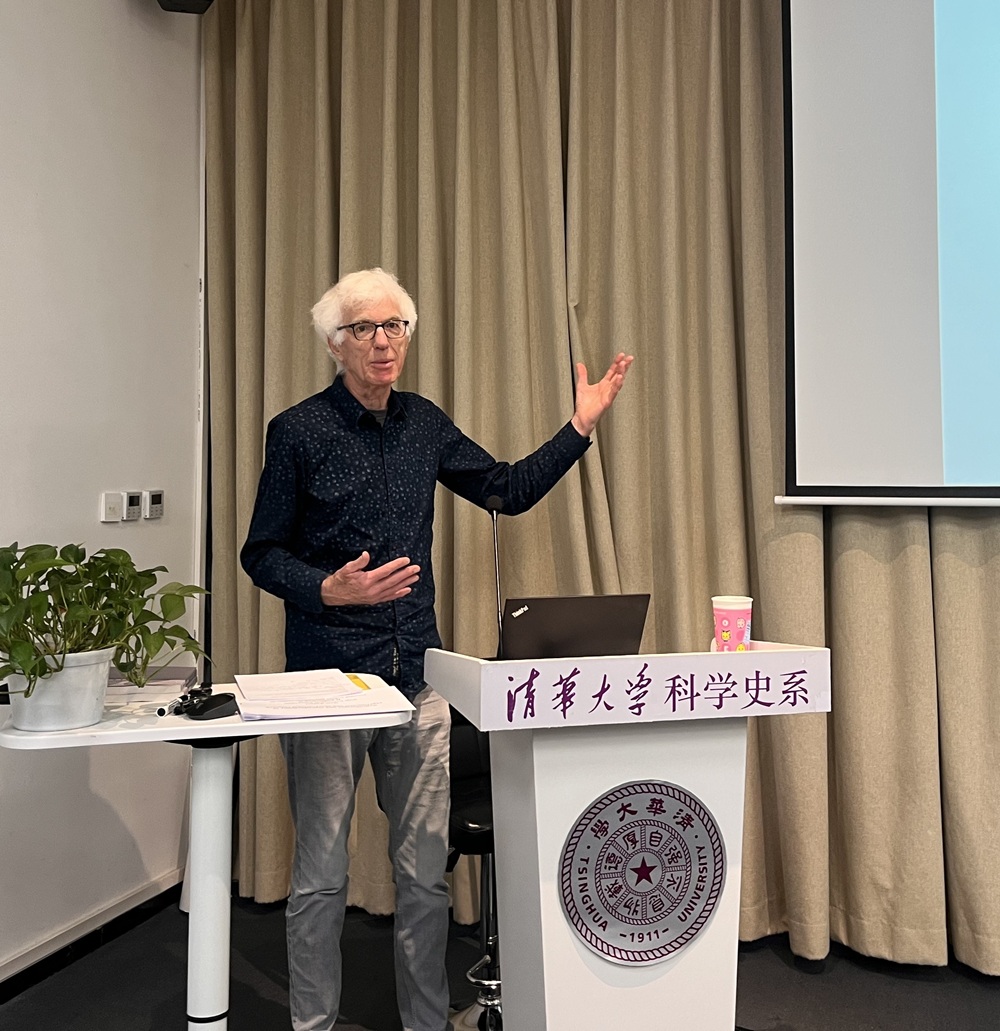
At the opening of the lecture, Professor Rad clearly defined the core theme of this discussion, which is to systematically construct a general theory of "reproduction" and "reproducibility" in scientific experiments. Professor Rad pointed out that from a philosophical and even a broader social perspective, scientific practice fundamentally undertakes two core goals: one is to produce knowledge, which is more accurate than simply claiming to "discover the truth"; the other is to commit to promoting the development of technical systems. Under such dual goals, "reproduction" and "reproducibility" have become the criteria for the intersubjective validity of knowledge and also the cornerstones to ensuring the stable operation of technical artifacts and technical systems in reality. Professor Rad particularly emphasized that he prefers to use reproduction and reproducibility rather than replication, which is common in English literature. The reason is that scientists in laboratories or observational fields do not simply repeat some abstract logic, but effectively intervene in the world, change the world, and create concrete objects at the material level.
To further clarify the intellectual context of the philosophy of scientific experimentation, Professor Rader compared two major historical traditions in the study of scientific experimentation in the 20th century. The first is the Continental tradition of the early 20th century, especially the ideological schools represented by France and Germany, including scholars such as Gaston Bachelard, Georges Canguilhem, and Jürgen Habermas. They had long paid attention to the role of science at the technical and practical levels and had a profound understanding of the material operational attributes of science. The second is the Anglo-American tradition, which emerged in the second half of the 20th century and was marked by the famous slogan "Experimentation has a life of its own" proposed by Ian Hacking in the 1980s. This tradition argues that experimentation is not merely an appendage of theory. Although the Anglo-American tradition emphasizes the importance of intervention, it still focuses on the epistemological dimension of science. Professor Rader's core argument is to integrate the practical and technical dimensions of the Continental tradition with the epistemological dimension of the Anglo-American tradition, so as to construct a comprehensive philosophical system of experimentation that can comprehensively consider the multiple dimensions of scientific practice.
Subsequently, Professor Rad elaborated on the five dimensions of his philosophical system of scientific experimentation. First, experimentation encompasses not only theoretical interpretation but also material operations and skills. Professor Rad vividly recalled his experience as a physics student when he spilled mercury all over the laboratory floor due to clumsy operation, illustrating the fundamentality and difficulty of material operation skills in scientific experimentation. Meanwhile, material realization is inseparable from a certain degree of theoretical interpretation; even Newton's experiments on optics relied on the theoretical concepts of light as support. Second, the experimentation process includes stages such as experimental preparation, interaction, and detection. Third, it refers to the correlation between the object and the instrument readings. Fourth, it is the control of the "socio-material" interaction between the experimental system and the environment. Fifth, it covers the different types and degree ranges involved in repeatability.
In terms of "reproducibility", Professor Radl subdivided it into three types. The first is the reproducibility of the experimental process under a fixed theoretical interpretation, which refers to the reproduction of the complete process from preparation, interaction to detection under the same theoretical discourse. For example, in atomic physics, specific spectroscopic processes and atomic models are used to measure the energy levels of hydrogen atoms. The second is reproducing the results of the original experiment through different processes, such as determining the Avogadro constant using ten completely different physical methods, or measuring the energy levels of hydrogen atoms through particle collisions instead of spectroscopy, thereby enhancing the intersubjective validity of knowledge. The third type is easily overlooked, which is the reproducibility of the material realization in the experimental process (which can be placed under different theoretical interpretations). Professor Radl assumed an experimenter adhering to Newton's theory and an experimenter adhering to Einstein's theory of relativity. Due to the incommensurability of their theoretical systems, they seem to live in different worlds conceptually; but on a material level, as long as they can describe and perform the same instrumental operation actions in everyday language, they have completed the repetition of the same set of material operations. This indicates that scientific practice can bridge the theoretical gap at the operational level. Meanwhile, regarding the subjects of repetition, he distinguished four dimensions: anyone, contemporary peer scientists, the original experimenters, and lay operators. Combining these with the above three types of reproducibility, he further outlined the complex picture presented by reproducibility in practical operations due to skill and knowledge thresholds.
Furthermore, Professor Rade redefined the relationship between repeatability and scientific realism. Faced with the academic debate over whether unobservable theoretical entities (such as electrons and genes) are real, Professor Rade pointed out from the reality of experiment and observation that traditional realism posits an objective external world that exists independently of human existence and human knowledge. However, because we inevitably alter the objects under study during intervention and interaction, the actual repeatability process is a "socio-material" construction realized through human skills and theoretical interpretations, which cannot be explained in a realist manner independent of humans. This does not mean abandoning realism, but rather regarding repeatability as real. Such repeatability is a possibility that can be repeated; it cannot be arbitrarily created by humans but is constrained by the potentiality of nature itself, similar to Aristotelian potentiality.
After finishing the theoretical explanation, Professor Ladd turned the topic to the "reproducibility crisis", particularly the severe challenges faced in the fields of psychology and medicine. Citing the data that 70% of psychological research results are irreproducible, he pointed out that the attributions such as academic fraud, academic misconduct under publication pressure, and academic journals' neglect of reproducibility are still insufficient. From an epistemological level, he analyzed that there is no purely objective data in science; data is always generated in specific interpretations and material interactions. For example, in psychology, if data generated from specific research groups is rashly promoted, irreproducibility is only natural. In response to the crisis in the field of psychology, Professor Ladd further refined three in-depth issues. First, when discussing reproducibility, the psychological community may have ignored the responsibility of the original experimenters themselves to conduct replication verification, which is a basic professional norm in the traditions of natural sciences such as physics. Second, psychology is sometimes limited to so-called "direct replications", naively assuming that all details of the original experiment can be completely replicated, while ignoring the unperceived but crucial "socio-material" differences. Third, and most importantly, is the dilemma of the "double hermeneutic" in psychology. For example, in the well-known "foot-in-the-door" effect, the high acceptance rate in 1966 could not be reproduced in 1999. Professor Ladd believes that the root cause of this crisis is not the collapse of the experimental methods themselves, but the profound changes that have taken place in the human social world. Therefore, insisting on the eternal reproducibility of certain quantitative results across eras and cultures is a disregard for the dynamic nature of human society.
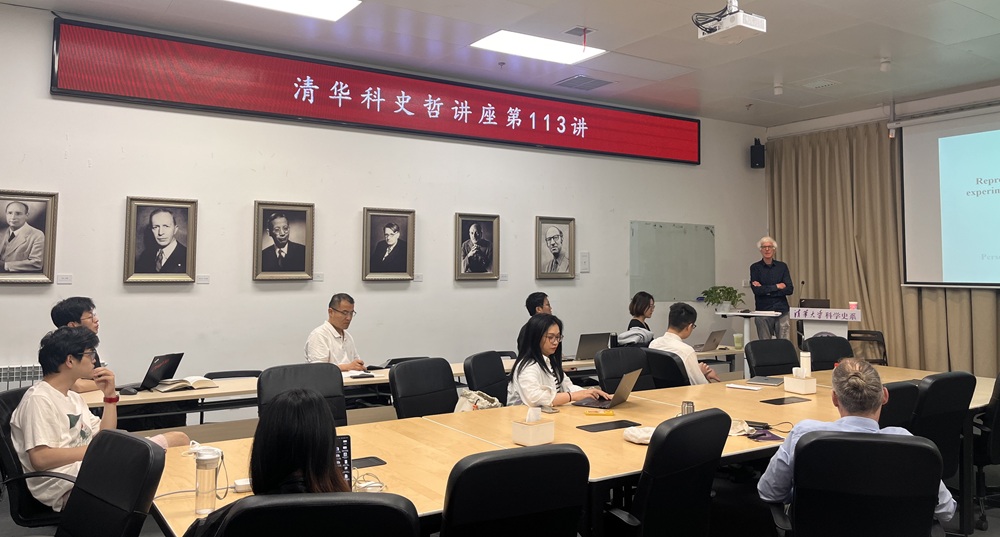
At the end of the lecture, Professor Rade put forward two highly enlightening open questions: First, should scientific experiments and observations always be reproducible? Professor Rade believes that when dealing with the ever-changing social world, occasional non-reproducibility may instead reflect real social changes, but in the fields of medicine and technological applications, we still clearly have a strong demand for their stability and effectiveness. Second, should we always pursue repeating experiments? Translating experimental results into large-scale applied technologies means we must change the world and shape specific conditions in reality to ensure the technology works. However, such large-scale material and social transformation of the real world is not necessarily without ethical and social issues.
During the Q&A session, the professor engaged in discussions with the audience on multiple questions. One audience member suggested that regarding the controversy over whether failed reproducibility equates to academic misconduct, a distinction should be made between its epistemological nature and normative characteristics. Professor Rad expressed strong agreement and emphasized that a single failure in replication might stem from the experimenter's lack of sophisticated tacit skills or detailed knowledge, which constitutes an epistemological technical failure and should never be rashly equated with intentional fabrication at the moral or social normative level; the evaluation systems for the two should be clearly separated. Another audience member asked, if reproducibility is regarded as a reality, does human participation in experiments alter its definition. Professor Rad clarified that "replication" as an actual intervention action necessarily relies on human operations, but "reproducibility" as natural potentiality itself does not depend on human will, which is also the key point that distinguishes his view from Hacking's entity realism. An audience member raised a question about the translation of "reproducibility" as "kě zài xiàn xìng" (reproducibility) in the Chinese translation of Professor Rad's article in *Philosophy of Scientific Experiment*, the common usage in the Chinese academic community being "kě chóng fù xìng" (repeatability), and the professor's emphasis on the productive connotation of "product" in his lecture. Professor Rad responded that Marx had actually keenly captured the "productive"特质 exhibited by the integration of science and industry, and his choice of this term was also to refute the traditional notion that has long regarded science merely as "thinking and reasoning". An audience member present added that in English, the meanings of words like "reproduction" and "replication" can be clearly distinguished, but in the Chinese context, seemingly literal translations such as "zài shēng chǎn (xìng)" (reproduction) may no longer be suitable for the context of experimental philosophy due to their existing meanings and usages. The host finally asked what challenges the rise of artificial intelligence brings to experimental philosophy. Professor Rad believed that artificial intelligence should first and foremost be regarded as a technology rather than a purely abstract reasoning algorithm. When applying the theory of reproducibility to examine artificial intelligence, one must thoroughly explore how its vast training data is collected, filtered, and infused with biases through interaction with social reality; at the same time, it is necessary to clarify whether what is to be replicated is the algorithm's statistical results or the user's subjective interactive experience on the terminal. Professor Rad also discussed other issues with the audience. Finally, the lecture concluded with warm applause.
Written by Wang Zeyu
Reviewed by Cheng Zhixiang