

On the afternoon of April 27, 2026, the Department for the History of Science at Tsinghua University was honored to invite Dr. Erling Agøy from the University of Oslo, Norway, to deliver a lecture titled "‘Climate Is Neglected’: Interpreting the Climate Chapters in Local Chronicles of the Early Qing Dynasty (1644–1722)" at Room B206, Meng Minwei Humanities Building. The lecture was hosted by Assistant Professor Liu Xiao of the Department for the History of Science. Starting with the human climate experience of the Little Ice Age in the Jiangnan region during the 17th century, Dr. Agøy’s research focus gradually shifted to the history of climate thought in the Ming and Qing dynasties, including the climate chapters in local chronicles, war omens, and the concept of dialects in local chronicles.
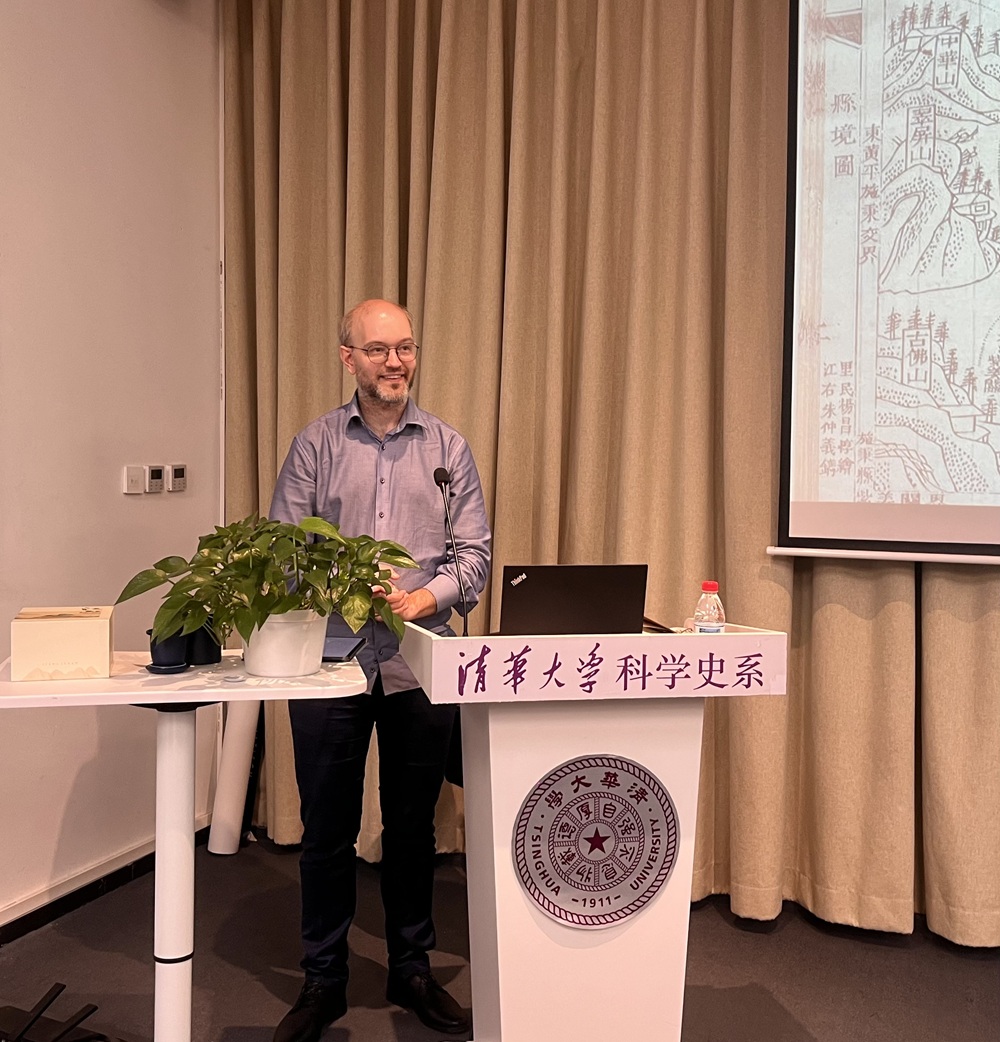
In this lecture, Professor Ao shared his latest research results, exploring how climate was described and explained in local Chinese gazetteers from 1644 to 1722 (the early Qing Dynasty). The core inquiry of the lecture is: What is the connection between the marginalized accounts of local climate in these gazetteers and modern climatology or climate science? Professor Ao proposed that to truly understand these historical texts, we should not only measure them by the standards of modern science but also view them from the dual perspectives of "Early Science" and "Local Identity".
First, Teacher Ao Youhua raised a question: "Why describe the local climate?" During the Ming and Qing dynasties, the peripheral regions of the "empire" (especially the vast territory of southern China) long endured the regional stereotype of being "foreign lands" or "barbarian territories." With the prevalence of travel culture, a large number of elite officials, travelers, soldiers, and merchants frequently visited these areas. To overcome their fear of new environments, they needed an accurate understanding of the actual climatic conditions in these unknown places. Furthermore, concerns about diseases (such as the famous "miasma" in the south) and the high degree of dependence of agricultural production on local climatic conditions constituted the most core practical considerations that prompted local elites to record climatic characteristics.
On this basis, Professor Ao conducted an etymological investigation and comparison of the concept of "climate" between Chinese and Western cultures. He pointed out that the English word "Climate" is derived from the Ancient Greek "κλίμα", whose original meaning emphasized the division and difference of geographical space determined by latitude. The modern Oxford English Dictionary defines it as the general pattern of weather conditions such as temperature, humidity, precipitation and wind force in a specific area. In contrast, the Chinese word "Qihou" has a completely different intellectual lineage. It is composed of "solar terms" and "five-day periods", and was initially based on the time system of the twenty-four solar terms or the seventy-two five-day periods. Therefore, the concept of "Qihou" in the traditional Chinese context has been more focused on seasonal changes and rhythm alternations in the time system from the very beginning. However, Professor Ao emphasized that in the early Qing Dynasty, when the term "Qihou" in the context of local chronicles referred to the long-term and typical weather conditions of a specific place, its connotation was highly consistent with the concept of "Climate" in modern English.
The lecture then delves into the textual forms and unbalanced geographical landscapes of the "climate sections" in Local Gazetteers of the early Qing Dynasty. Local gazetteers are key foundational historical materials for recording local conditions in ancient China, and are usually compiled at the provincial, prefectural, and county levels. The content recorded in local gazetteers includes official systems, mountains and rivers, establishments, figures, literary works, customs, etc., and their essence is a cultural tool for local spaces and their elite scholar-gentry classes to conduct "self-presentation". Within the vast content system of local gazetteers, climate descriptions are usually marginal or subordinate—they rarely appear as independent chapters, but are often subsections under chapters such as "Customs" and "Geography". These climate sections are usually extremely short in length, ranging from 30 to 2,000 characters, with an average of only about 200 characters.
Through long-term investigation and research on 895 local chronicles from the early Qing Dynasty, Professor Ao found dedicated chapters on climate in 132 of them. Further specific data revealed a huge north-south imbalance in the geographical distribution of climate records. In most parts of northern China (such as Shaanxi, Shanxi, Henan and other places), there were almost no chapters on climate; however, the further south in China one went, the more frequent and detailed the climate records became. In Fujian, Guangdong, Guangxi, Yunnan and the then Taiwan region, chapters on climate were almost a "standard configuration" of local chronicles. Professor Ao explained that such geographical differences stemmed from the deep structure of traditional Chinese cultural identity. The classic texts of the Pre-Qin period (such as *The Book of Songs* and *Huangdi Neijing*) were mainly produced and described in the northern Central Plains region. Therefore, the "northern climate" was tacitly regarded as the universal standard and norm in ancient academic discourse. When scholars in the north compiled local chronicles, they did not need to spend words to explain daily phenomena completely consistent with the classics. Only when the climate in the southern regions differed significantly from the classical "standard" to the point of being strange or unavoidable would local scholars specially record and explain it.
Furthermore, Professor Ao holds that we should break down some biases in traditional history of science and evaluate these local chronicle texts under the framework of "Early Science". For a long time, traditional historians of science (such as Zhu Kezhen and Joseph Needham) have often overlooked the climatic descriptions in local chronicles when sorting out the history of meteorology in China. This is because local chronicle texts do not conform to the stringent "scientific methodology" of modern Western science, which emphasizes experimentation and falsifiability of data. However, Professor Ao argues that these texts actually reflect the ancient people's way of knowledge production. Using climatic texts from southern regions such as *Heyuan County Chronicle* and *Fumin County Chronicle*, he elaborates on how the compilers of local chronicles keenly summarized the typical natural characteristics of southern China, including extremely hot and volatile weather, as well as dangerous diseases and miasma. When explaining the causes of climate, the ancients demonstrated a simple yet logical geographical determinist way of thinking: they attributed climatic anomalies to the obstruction of mountains and hills, the regulation of oceans and lakes, and even the altitude. Meanwhile, the traditional Chinese theory of yin and yang (such as "imbalance between yin and yang" and the volatilization of "earth qi") was also widely applied.
In terms of content, the compilers of local chronicles adopted a methodological system of textual mutual verification: first, "quoting classics", where the compilers extensively cited ancient classics, previous local chronicles, and medical monographs in the Lingnan region, such as *Master Lü's Spring and Autumn Annals*, *Records of a Mission to a Remote Land*, and *On Health Preservation in Guangnan*. Then there is "poetry", where verses by literati (such as Yang Shen and Su Shi) were cited as climatic evidence, a practice typical in the academic tradition of ancient China. Third is "local proverbs", such as the widely circulated saying in Jiangnan and South China, "Four seasons are all like summer, and a single rain turns the world into autumn", which was often used to summarize local climatic characteristics. Fourth is "personal observation", with some texts showing the compilers' personal on-the-spot observations and unique narrative styles. Finally, there is "mutual comparison": many chapters on climate made horizontal comparisons between local climate and the "Central Plains provinces" to identify local characteristics, and some even explored micro-climatic differences within counties. These characteristics precisely indicate that the climatic knowledge in the climate chapters or local chronicles can be regarded as a form of "Early Science". Its marginal status allowed and even required the compilers to produce some original content, and its culturally constrained and socially embedded nature also conforms to the characteristics of "Early Science".
Furthermore, Professor Ao also analyzes the power logic behind the climate texts from the sociological motivation of "Local Identity". The climate chapters in local chronicles are usually subordinate to the "Customs" volume, which indicates that the elite class regarded climate as a core variable in shaping local social customs and cultural characteristics. For example, the *Zhangzhou Prefecture Chronicle* (1715) states: "The seasons are of the utmost importance to customs." For local literati in the southern regions, they faced certain cultural challenges: they had to effectively refute the long-standing stereotypes of the southern regions as "dangerous, disease-ridden, and uncivilized" in the Central Plains. Local chronicles became a way for them to strive for cultural discourse power and integrate their hometowns into the cultural community.
To achieve the goal of "taming" the perilous natural environment, the compilers of local chronicles adopted a series of exquisite rhetorical and argumentative strategies. First, they acknowledged and restricted the boundaries of danger. The texts did not deny the objective existence of miasma, but attempted to limit its negative impacts by defining geographical boundaries. For example, they claimed that miasma only existed in some extremely remote areas, or was only common in the past. Second, they attributed the improvement to "imperial grace" and "civil governance". Some texts used highly political rhetoric, asserting that with the boundless imperial grace of the Qing Empire, the implementation of civil and military governance, as well as the continuous reproduction and settlement of the Han population, the once harsh local climate had been gradually "transformed", and miasma was dissipating day by day. Third, they actively constructed positive impressions. Many texts attempted to give positive evaluations of the local climate, emphasizing that the area was "free from severe cold and scorching heat", and redefined the originally regarded "harsh" tropical climate as a harmonious and livable environment.
Finally, in his concluding remarks, Professor Ao Youhua reiterated that although the climate chapters are minuscule in volume within the voluminous local records of the Qing Dynasty, they represent an "academic relay race" carried out by ancient Chinese scholars to explain the spatial variability of climate across the country, making an indelible contribution to the study of climate in modern China. Towards the end of the lecture, Professor Ao concluded with the recent southern Chinese festival of "Shangsi Festival" (the third day of the third lunar month), and echoed it with proverbs from the local records such as "Frogs croak around noon—high and low fields yield a good harvest".
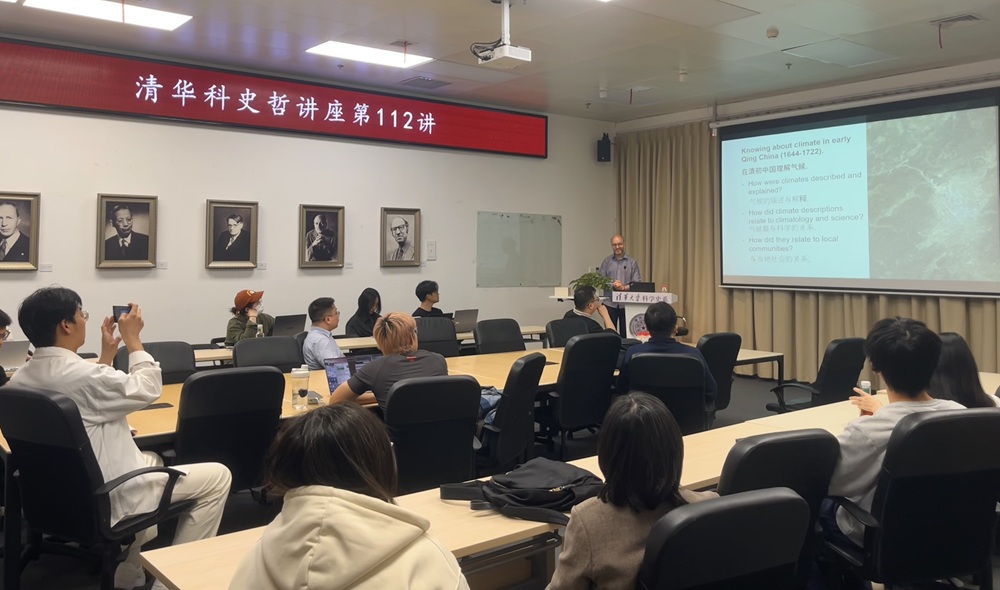
After the lecture session, the teachers and students present held an in-depth discussion on issues such as the compilation mechanism of local chronicles, the evolution of climatic concepts, and future cross-national comparative research. Regarding the reason for the huge disparity in the number of climatic records between the northern and southern regions, some audience members raised a question: Logically, the ecological degradation in the northern regions was more severe, so why were climates rarely mentioned in local chronicles? Teacher Ao further clarified that this essentially reflects the cultural hegemony of classical texts. It was the climatic model of the north that was established by the classics of the Pre-Qin and Han dynasties, so northern scholars did not need to explain daily phenomena that were completely consistent with the classics. In contrast, facing the climates regarded as exotic by the Central Plains, southern scholars had no choice but to take the initiative to record and explain them, which over time evolved into the writing tradition of southern local chronicles.
Regarding the question of whether local scholars relied on ancient authoritative theories or personal experience when explaining climate, Teacher Ao pointed out that local chronicles, as highly stylized texts, rarely disclose their compilation processes. Due to space constraints, the texts contain both fixed rhetoric appealing to ancient authorities such as the theory of yin-yang and five elements, and must also include direct experience from daily life. It would be impossible to justify oneself by purely plagiarizing previous dynasties' documents without combining personal experience, so this must be a deep mixture of local experience and textual authority.
Regarding research methods and the acquisition of historical materials, a teacher asked whether the corpus of nearly 900 local chronicles relies on digital technology. Teacher Ao frankly said that this work was carried out several years ago. Due to distrust in the accuracy of OCR-scanned text at that time, he mainly relied on online ancient book image databases such as "Airuyoushi" for several years of manual checking and word-by-word reading.
The discussion also extended to the shift in the understanding of "miasma" diseases in the mid-Qing Dynasty. Teacher Ao explained that by the mid-Qing Dynasty, miasma was increasingly no longer regarded as a specific disease (such as malaria), but was broadly understood as a state of air quality or the overall severity of the natural environment.
Regarding the "Authorial Voice" in the climate-related texts of local chronicles, an audience member asked whether it was possible to identify the independent observations of a single author. Teacher Ao responded that the compilation of local chronicles was a collective project actually written by numerous local students, and only a very small number of chapters could clearly identify specific authors. However, in marginal entries, some ghostwriters indeed had more writing freedom and showed some personal rhetorical styles.
In terms of conceptual differentiation, the difference between "climate" in the context of the Ming and Qing dynasties and its modern meaning has also aroused discussion. Teacher Ao pointed out that even today, "weather" and "climate" are often used interchangeably in daily contexts. However, in the early Qing Dynasty, the term "Qihou" (Qihou) used in local chronicles, when describing the long-term typical meteorological conditions of a place, had a connotation that was very close to the concept of "Climate" in modern English.
In addition, the audience also had an in-depth discussion with Teacher Ao on topics such as the comparison of Sino-Western perceptions of climate from the perspective of global history, the regionality and commonality of folk proverbs, and future research plans. Finally, the lecture concluded successfully with warm applause.
Written by: Yang Mingfan
Reviewed by: Liu Xiao