
On March 13, 2026, the Department of History of Science held the 111th Tsinghua Lecture on History and Philosophy of Science. The theme of this lecture was "Peering into the East Asian Nature of Modern Medicine?". The speaker was Professor Liu Shiyong, who holds a Ph.D. in History from the University of Pittsburgh, USA. He is currently a distinguished professor in the Department of History at the School of Humanities, Shanghai Jiao Tong University, and previously served as a research fellow and deputy director at the Institute of Taiwan History, Academia Sinica. He has also served as the president of the East Asian Environmental History Society, a visiting scholar at the Harvard-Yenching Institute, and has conducted research at several international institutions including Johns Hopkins University. Professor Liu's main research areas are the history of medicine, the history of public health, and East Asian environmental history, covering topics such as colonial medicine and international health policies during the Cold War.
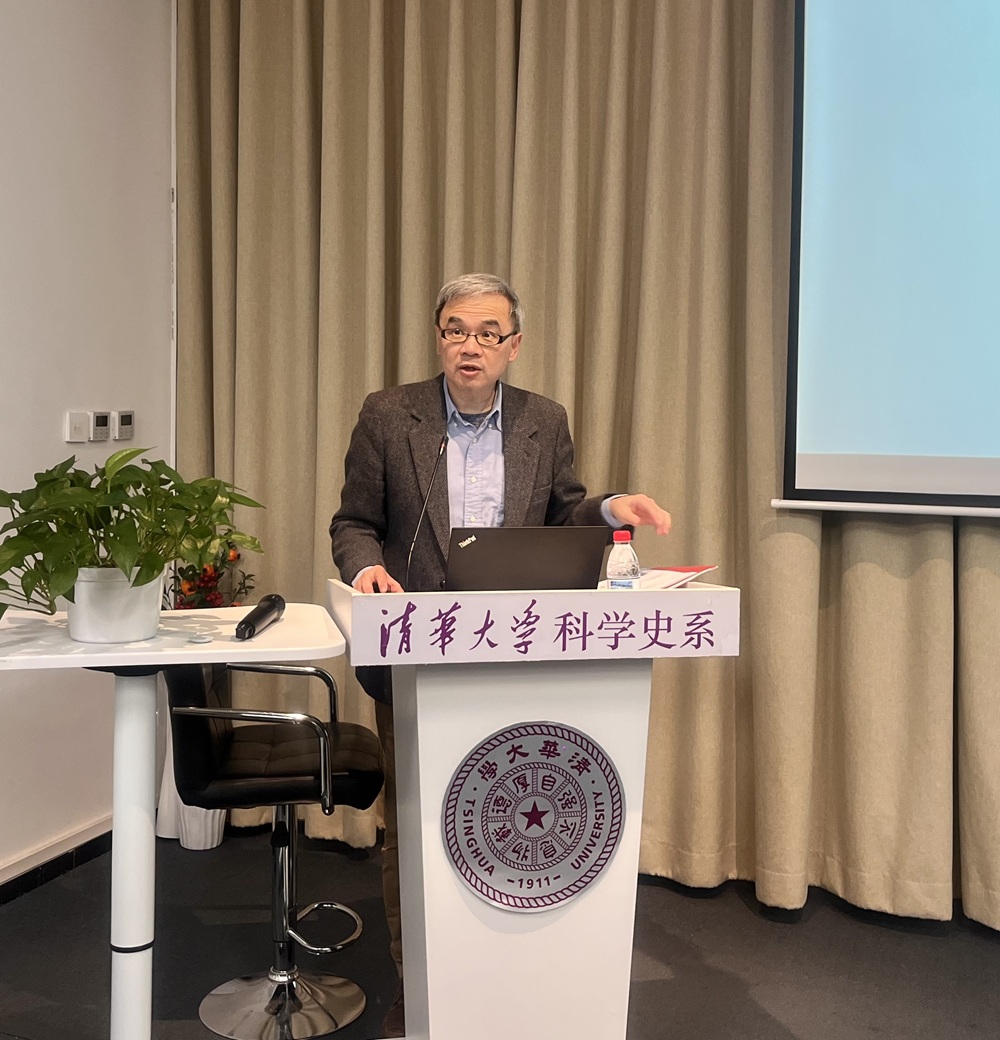
At the beginning of the report, Professor Liu emphasized the complexity of "East Asia" in the title and the agency of the self-evolution of East Asian medicine, and raised the fundamental question "What is modern medicine?". According to William Osler's view, pathological anatomy, laboratory science and public health are three indispensable elements of modern medicine. The report aims to divide East Asia from the perspective of medical history, interweave internal and external historical narratives to analyze the formation mechanism of modern medicine in East Asia, and discuss it from three aspects: the introduction of modern anatomy, the application of modern pharmacy and the construction of public health, so as to reflect on the modernization of East Asian medicine and the acceptance of modern medicine in East Asia. At the same time, Professor Liu reminded us that as researchers, we need to distinguish when selecting archival materials.
Take Japanese anatomy as an example. The introduction of Dutch medicine in the late Edo period had an impact on Japanese traditional Chinese medicine, and anatomy thus entered Japan. However, in reality, it did not quickly develop into the anatomical science in the modern sense at the very beginning. Anatomical works such as *Surgical Tradition* published in translation in 1706 and *Zang zhi* (Treatise on Viscera) in 1759 also did not have a significant impact. At that time, there was a "non-human" class in Japanese society, whose members could be arbitrarily killed for entertainment. In 1771, Maeno Ryōsaku and Sugita Genpaku went to the Kozukahara execution ground to "watch the viscera" (i.e., a corpse dissection show). They asked the executioner to operate according to Western anatomy textbooks for comparison. In 1774, *Kaitai Shinsho* (New Book of Anatomy) was published (German original: Anatomische Tabellen, 1772), which became the knowledge foundation for Japan's reference to modern Western medicine. In contrast, traditional Chinese medicine surgery gradually declined since the prevalence of Confucian doctors in the Ming and Qing dynasties. Even though anatomical works had been introduced as early as 1690, they were limited to being read within the imperial court and not spread. Moreover, the social morality and laws at that time explicitly opposed any form of corpse desecration. It was not until the 1920s that laws were enacted to allow corpse dissection for scientific research. It can be seen from this that knowledge based on experiments, if not supplemented by practical operations during the introduction process, can easily be put on the shelf and forgotten.
However, the situation regarding medicine and medical practices is different. In modern times, Japan learned a great deal from Western medical knowledge and systems, putting Kampo medicines in a crisis. Kampo medicines then began to strive for coexistence with Western medicines. Later, during the Russo-Japanese War, Kampo medicines were officially included in the government's *Army Pharmacopoeia*. In 1897, Japan established its first pharmacological laboratory to test the efficacy of Kampo medicines and incorporated them into official drug production in Japan. Tracing back, the foundation for the scientificization of Kampo in Japan lies in the rise of pharmacognosy and herbalogy. Pharmacognosy was officially established as a pharmaceutical science in 1815, and the theory of constitution is regarded as one of its important foundations. In the 1900s, Chinese medical students studying in Japan introduced Japan's development of Western pharmacy to China, and successively founded relevant magazines and institutions. Japanese pharmacognosy also entered the Korean Peninsula and Northeast China along with the expansion of colonial forces. Professor Liu used examples such as the isolation of ephedrine in Chinese medicine research and the extensive influence of Chinese medicine research institutes (including the spread of medicines and pharmaceutical methods, and their impact on the Korean Peninsula, etc.) to demonstrate that Japan successfully achieved the scientificization of pharmacognosy. He believes that in this sense, modern medicine should not only include Western medicine but also Oriental medicine.
Public health is an important indicator reflecting the social and political modernization of East Asian societies. Professor Liu points out that major public health reforms often stem from social crises or political transformations, and the establishment of a modern public health system is also part of the construction of modern countries and societies, which requires social consensus and support. Take public health quarantine as an example: at that time, the quarantine carried out in China targeted "diseases" rather than "germs", and there were many differences and disputes among various parties on how to conduct the quarantine. It can be seen from this that the transformation of knowledge and systems is actually not as simple as described in linear history, but is full of complex and diverse changes and evolutions.
At the end of the lecture, Professor Liu made a summary: external factors in anatomy are more significant than social factors; the internal technological and knowledge conditions of pharmacy determine its external development; public health shows a differentiated development characterized by the interweaving and entanglement of internal and external factors. He also inspired us to think from the perspective of historical methodology: is the distinction between internal and external history, which is very "East Asian characteristic", reasonable? Perhaps by breaking away from the either-A-or-B way of thinking that seeks预设 answers and approaching the subject with a humble heart, we can become better historical researchers.
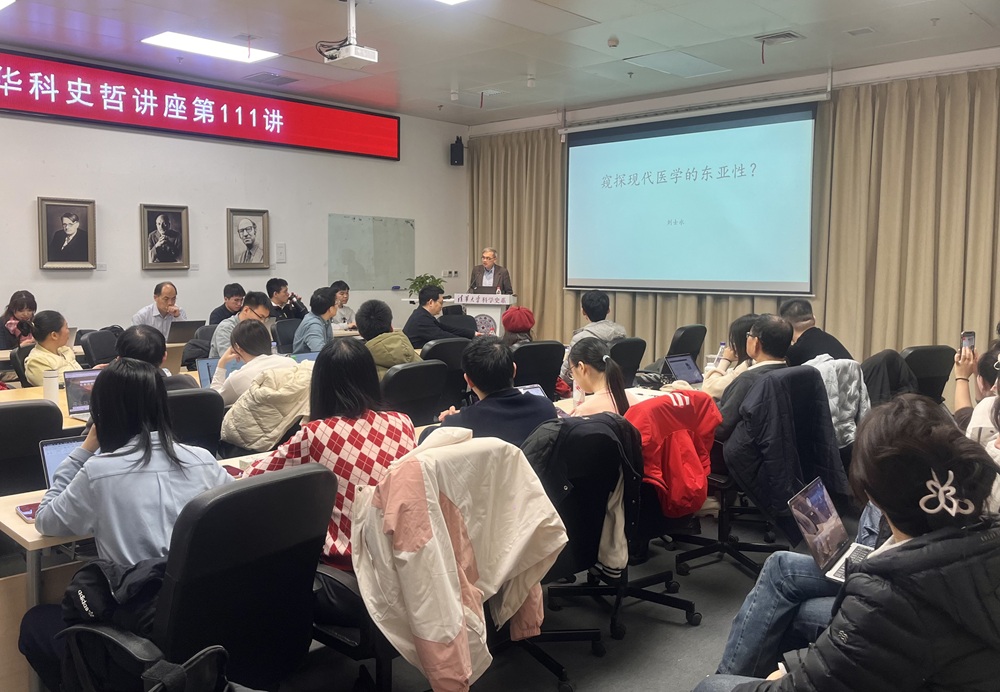
During the discussion session after the lecture, the audience raised questions on topics such as the Soviet Union's influence on East Asia, the collision between traditional Chinese medicine and Western medicine during the wars of the 1930s-1940s and whether the subsequent barefoot doctors could be considered a form of modern medicine, how to re-divide East Asia from the perspective of medical history, and the position of the three aspects of the report in the broader world context. Professor Liu answered and responded to each question one by one, and the lecture ended with lively discussions and applause.
Written by: Ma Chuxin
Reviewed by: Shen Yubin