

On January 14, 2026, the 109th Tsinghua Lecture on History and Philosophy of Science was successfully held. The theme of this lecture was "Tangible Light and Intangible Light: The Rise and Perfection of Aristotle's Light Theory". The speaker was Ma Ruizhi, one of the earliest master's graduates from the Department of History of Science at Tsinghua University, a doctor from the Department of Philosophy at Humboldt University of Berlin, and currently an assistant researcher at the Department of Classics at Humboldt University of Berlin.
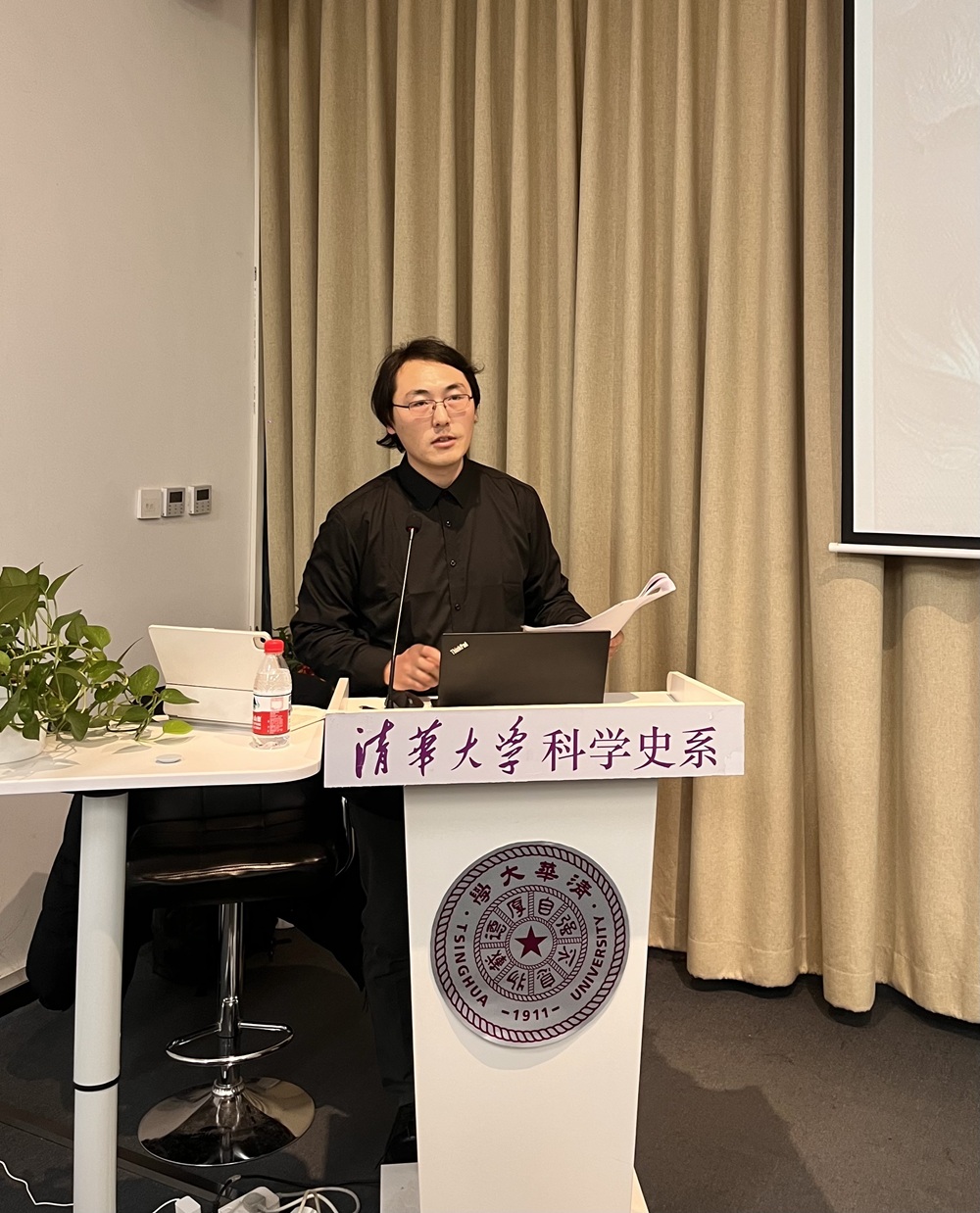
At the beginning of the lecture, Ma Ruizhi mentioned Professor Wang Zheran's monograph "The Origin of Perspective" from our department, which points out that the connotation of the term "Optics" varies significantly in different historical periods. Before Kepler, the core research object of this discipline was visual activities, and light was only studied as a condition or object for vision to occur. Therefore, many historians of science believe that there was no specialized "science of light" (i.e., optics) in ancient times. However, Ma Ruizhi clearly refuted this, emphasizing that the absence of an independent discipline of optics does not mean that ancient and medieval thinkers lacked systematic exploration of light. In fact, they had conducted detailed and in-depth discussions around light. In 2019, scholar Isidoros Katsos published a paper in Isis attempting to illustrate that there was physics of light in ancient times, whose core was to explore the nature of light and its role in the movement, change, generation, and destruction of the natural world. This view is importantly based on Plato's "Timaeus" — Plato regarded light as the "third kind of fire", and fire, as one of the four elements, is a basic component of the natural world, which means that light occupies an important position in Plato's cosmology and physics. However, the research of this article is limited to the Platonic tradition and still follows the traditional academic judgment that in the Aristotelian tradition, light is only regarded as a state of transparent objects rather than an entity, and the theory of light is subordinate to the theory of vision, explaining light as a necessary condition for visual activities rather than exploring light as a basic component of the material world.
To further clarify the background, Ma Ruizhi introduced the two major camps of ancient visual theories: the intromission theory and the extramission theory. The intromission theory holds that vision arises from the action of external objects on the eyes, with the eyes, as sensory organs, receiving external influences. The extramission theory, on the other hand, asserts that the eyes emit rays, light, or some kind of effect to the external world, similar to extending a "perceptual hand" to grasp information about objects at their locations and then returning it to the perceiver. Alternatively, as Galen argued, visual pneuma transforms the transparent medium into a visual tool to directly perceive external objects. Some views suggest that the Platonic tradition possesses a true physics of light, while the Aristotelian tradition lacks such a theoretical framework. However, Ma Ruizhi's core argument is to prove that the Aristotelian tradition also has a serious, systematic, and fully developed theory of light.
Subsequently, Ma Ruizhi elaborated on the core viewpoints of Aristotle's theory of light and summarized them into six points: light is the actuality of the transparent as transparent; light is analogous to the color of a transparent object; light is incorporeal; light is the presence of fire and similar objects in relation to transparent objects; light is the opposite of darkness; light is the presence of a state in the transparent medium. The most central proposition of Aristotle's theory of light is the "incorporeality of light" — light is not an object, has no extension, and cannot move. This stands in stark contrast to the prevalent theory of light as corporeal at that time and appears highly counterintuitive. Aristotle's theory of light is mainly embedded in the discussion of visual theory in Book II, Chapter 7 of *On the Soul*, and his research follows the explanatory chain of "sensible object - sensory activity - sensory capacity - soul". He believed that color is the proper object of vision, and color exists in two states: potentiality and actuality. Light is a necessary condition for color to enter the state of actuality, so to understand vision, one must first explore light. Aristotle's core definition of light is "the actuality of the transparent object as a transparent object". Transparent objects here include air, water, ether, and celestial spheres composed of ether, etc. He further divided objects in the sublunary world into three categories: light sources that generate light (such as objects with fiery properties), transparent objects that have no light and no color themselves (because they lack fixed boundaries, which are a prerequisite for objects to have color), and colored objects that have fixed boundaries but whose colors require light to achieve actuality. At the same time, Aristotle clearly pointed out that light is not an object, nor is it something that flows out of an object. This is because displacement can only occur in objects with extension and occupying space, and light does not have these attributes. Light is not fire, which is fundamentally different from the theories of Empedocles and Plato. Light and darkness are opposites, but darkness is not an independently existing entity, but merely the absence of light, which is completely different from the dualistic views of Manichaeism and others.
However, Aristotle's theory of light is faced with many controversies and interpretive difficulties. One of the core controversies is the explanation of the phenomenon of illumination — if light is incorporeal and immovable, how does the distant sun illuminate the Earth? Secondly, there is a divergence in the causal order. The traditional view holds that a light source first acts on a transparent medium, and then the medium acts on a colored object. However, in 2018, scholar Sean Kelsey put forward the opposite view, triggering a re-examination in academic circles of the order of action among the three. In addition, regarding the ambiguity in the semantics and reference of light-related terms (such as "phôs" and "augê") in Aristotle's texts, there is a controversy in academic circles over whether he distinguished between multiple types of light. A further difficulty is that in Book II, Chapter 8 of *On the Soul*, Aristotle draws an analogy between the reflection of light and the phenomenon of echo, proposing that light can be reflected. But if light is the actuality of a transparent object and is immovable, the phenomenon of reflection is difficult to be explained consistently with the traditional interpretation. Following Kelsey's approach, scholar Sean Costello pointed out the "impossible triangle" in Aristotle's theory of light: the medium needs to be illuminated by a distant light source, light needs to move to illuminate the medium, and light is immovable, and the three cannot hold at the same time. Furthermore, the two teachers and students put forward the "ecological optics solution" together, arguing that Aristotle's concept of light includes two types — ambient light (light that pervades space and exists stably) and effluent light (light that is movable and acts on the surface of objects), and that the causal order of ambient light comes after that of effluent light. However, this solution needs to borrow concepts from contemporary ecological optics and lacks direct textual support. Alexander, the most important ancient commentator on Aristotle, explained Aristotle by means of the concept of "relational change". He believed that the change of a transparent body only stems from the change in its relationship with the light source, without any substantial change in its own nature, similar to how other people become relatively shorter when Yao Ming walks into a room. This explains the instantaneous nature of illumination, and he also argued that the changes of both the transparent body and the colored object are relational changes, making it impossible to distinguish the order in which the two enter actuality. John Philoponus, another major commentator on Aristotle in the late ancient period, held that the sun first acts on the adjacent transparent body, endowing it with the ability to illuminate, and then this part of the transparent body activates the next part in sequence. This process has a causal sequence but is completed instantaneously in time. It explains the linear propagation characteristic of light, maintains the instantaneous nature of light, and does not require presupposing additional types of light. However, the "timeless successive process" in this solution has also been questioned by some critics.
Ma Ruizhi focused on Avicenna's solution, the core of which is a clear distinction between types of light. Avicenna divided natural objects into three categories: illuminating objects with "inherent light" (lux) such as the sun and fire; colored objects that require illumination to realize their color; and transparent objects that act as intermediaries. He also distinguished between "inherent light" and "acquired light" (lumen), considering both as surface properties. The transparent medium only plays an auxiliary role and is not directly involved in the generation of "acquired light". The light source, through the tool of the transparent medium, directly generates new light on the surface of the colored object. This light acts on the color in its potential state, bringing it into actuality, and together they act on the eye. In addition, Avicenna inherited Aristotle's view that "darkness is the absence of light", arguing that darkness is not a state of the transparent medium but a state of the surface of the colored object. The transparent medium still plays an auxiliary role even in darkness; however, in such cases, the colored object does not enter actuality and thus cannot activate visual activity. This solution not only solves the problem of how light, which cannot move, can illuminate distant objects but also avoids the forced explanation of action at a distance. It lies between Alexander's "weak solution" and Philoponus' "strong solution".
At the end of the lecture, Ma Ruizhi emphasized the systematic characteristics of Aristotle's theory of light and its influence on cross-cultural communication. Since late antiquity, the question of "whether light is an object" has become a "problematic" issue in the Aristotelian tradition. These arguments have been continuously supplemented and adapted, forming many short works titled "On Light and Its Nature," which have become standard teaching content in the Aristotelian tradition, demonstrating the strong vitality and wide dissemination of Aristotle's theory of light. After being interpreted by Avicenna, his distinction between "intrinsic light" and "acquired light" was widely accepted by Latin scholastic philosophers, such as Thomas Aquinas and Albertus Magnus, who all used this distinction to interpret Aristotle. This systematic interpretation promoted the inheritance and development of Aristotle's theory of light in the Islamic world and Europe. Although existing research is still insufficient to prove the existence of an independent optical discipline in ancient times, it is enough to show that ancient and medieval thinkers' exploration of light was not weak. They formed a highly explanatory intellectual tradition, laying an important foundation for the development of modern optics.
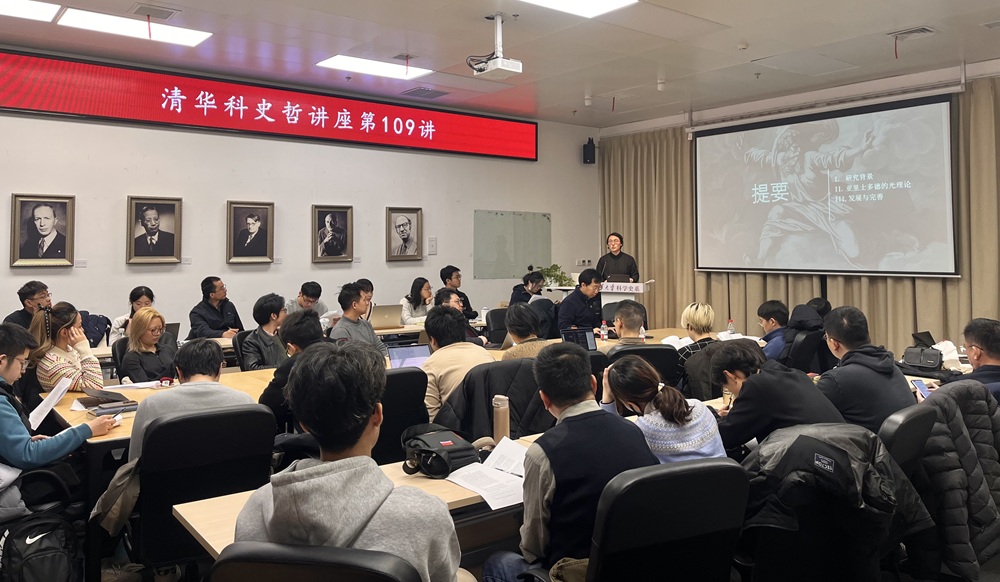
Finally, during the question-and-answer session, teachers and students engaged in a lively discussion. The audience of the lecture discussed with Ma Ruizhi issues such as whether the scholastic authors' interpretation of Avicenna's theory had a tendency towards the substantialization of light, whether the three light-related terms in the context of Aristotle could be distinguished holistically by expanding the text scope, the classification of darkness and related interpretations of religious texts, whether Avicenna was influenced by Neoplatonism and Sufism and its connection with the annotation of the "Surah of Light", the progressive significance of Avicenna's definition of light compared with that of Aristotle, the connection between Plato's *Timaeus* and Aristotle's light theory, and the metaphysical implications of Avicenna's light theory and its analogical connection with the "Unmoved Mover".
Written by: Liu Xiaotong
Reviewed by: Ma Ruizhi