

On the afternoon of June 4, 2025, the Department of History of Science at Tsinghua University held the 93rd Tsinghua Lecture on History and Philosophy of Science in Room B206 of the Humanities Building. The speaker of this lecture was Dr. Yoshimi TAKUWA from the Institute of Science Tokyo, who is currently a lecturer in the history of science at the College of Liberal Arts of the university. The theme of the lecture was "How did Chinese students obtain their Bachelor of Engineering from Japanese technical universities before World War II?", aiming to explore the unique system for foreign commissioned students at Tokyo Tech (now Science Tokyo) in Japan before World War II, and taking Chinese female student Wang Xiaosi as a case study to focus on analyzing how these systems provided a path for Chinese students, including women, to obtain Japanese bachelor's degrees in engineering.
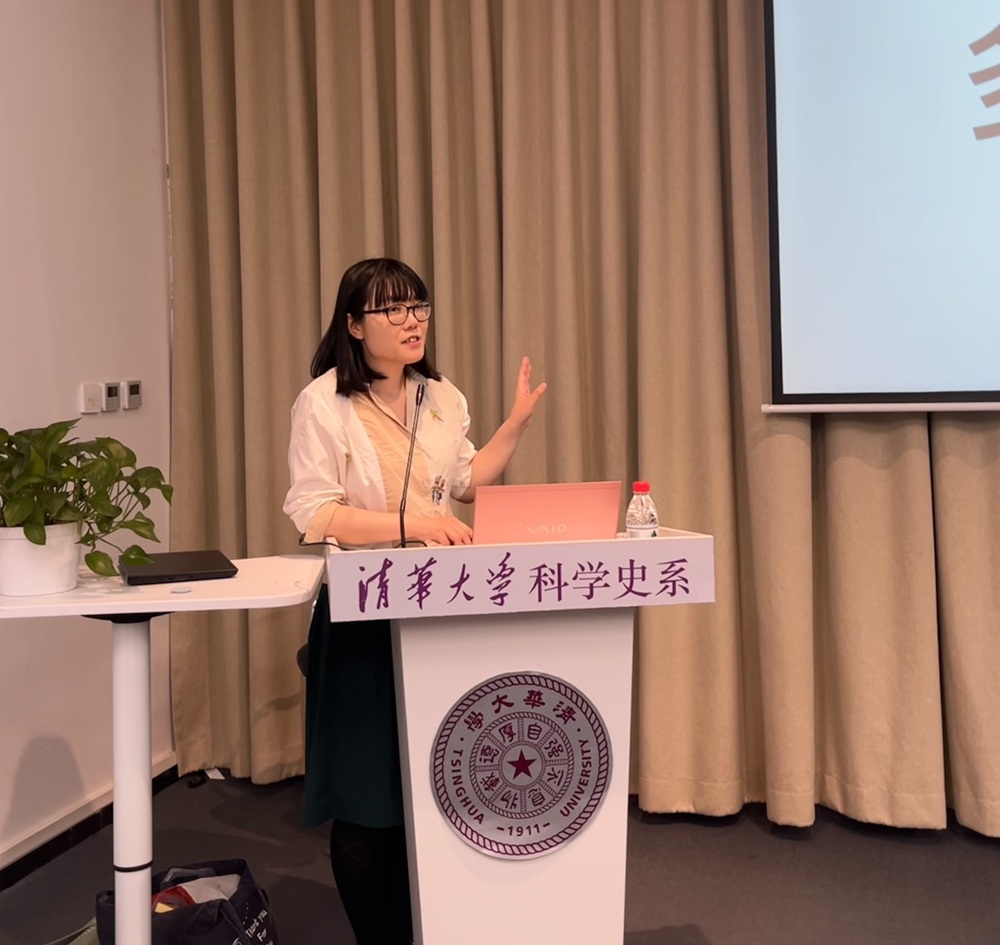
First, the speaker introduced the history of Tokyo Institute of Technology. Since its establishment in 1881, it has long focused on engineering disciplines. Under the promotion of its second president, Seiichi Teshima, the university took the lead among other government-run schools in admitting a large number of Asian international students starting from 1896. By the 1910s, international students accounted for as high as 20-30% of the total enrolled students in the university. By the eve of World War II, Tokyo Institute of Technology had admitted about 900 foreign students, most of whom were from China. After being upgraded to a university in 1929, most international students entered the bachelor's program (undergraduate) after completing their studies in the affiliated preparatory course. Tokyo Institute of Technology opened up a path for students including Chinese women to study engineering by expanding and flexibly applying the "entrusted student" system for foreign students. This was pioneering at that time because even the Faculty of Engineering of Japan's Imperial Universities imposed strict restrictions on female auditors in the 1930s. Among the first batch of graduates who obtained a Bachelor of Engineering degree in 1932, there were 3 international students (one of whom was from China). The practice of this system has proved that students from non-traditional backgrounds are also capable of achieving success in the engineering field.
Next, the speaker focused on introducing Wang Xiaosi (1907-1992), a female international student at Tokyo Institute of Technology. She was from Minhou, Fujian Province. She graduated from the Science Department of Tokyo Women's Higher Normal School and later studied in the Dye Chemistry Department of Tokyo Institute of Technology (enrolled from 1932 to 1935). According to the April 1932 faculty meeting documents, she was enrolled as a "foreign student", but documents after enrollment showed her status as a "commissioned student". According to the "List of Chinese Students Studying in Japan" compiled by the Japan-China Society, Wang Xiaosi received selected (supplementary) study-abroad support. She studied with the goal of obtaining a bachelor's degree in engineering and kept up with the required course progress. However, she began to take a leave of absence in September 1933, returned to China in June 1934, and finally withdrew from school in February 1935. Although she failed to complete her studies, her case remains an important individual case for studying early Chinese women studying engineering in Japan. According to the archives of Fuzhou City, Wang Xiaosi was the only woman of her generation who had studied abroad. She studied at Tokyo Women's Normal School in 1930 and, after returning to China, taught in Nanjing, Beijing and other places for many years.
After that, the speaker expressed expectations for further research: First, due to the lack of materials during and after the war, as well as the university's regulations on personal information protection, it is currently quite difficult to obtain complete information. Therefore, the speaker appealed to colleagues in the academic community, especially in terms of collecting and researching materials related to Chinese international students, to provide assistance and cooperation. Second, in the early 1930s, the number of people who went to study at Japanese universities or specialized schools (colleges) after obtaining a bachelor's degree in China, like Wang Xiaosi (a graduate of Shanghai Datong University), increased. It is hoped to hear the views of the participants on the value of Chinese bachelor's degrees in the 1930s.
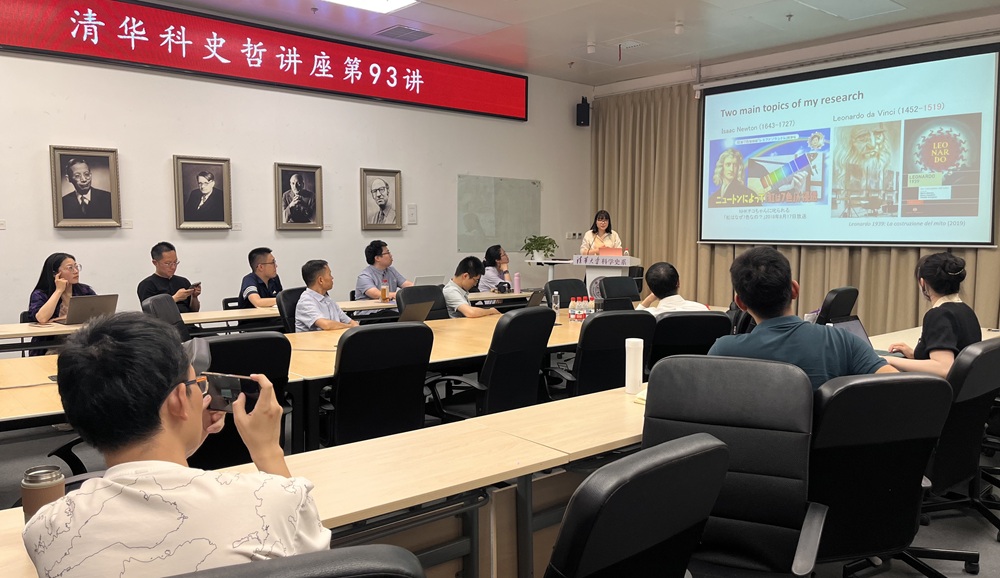
After the lecture, the teachers and students present had a lively and in-depth discussion on the core content of the lecture. Teacher Wang Wei raised a question about the reasons why Wang Xiaosi failed to complete his studies at Tokyo Institute of Technology. Based on the school's student records, Dr. Duoji responded that Wang Xiaosi dropped out due to illness; considering the historical fact that Wang Xiaosi had five children after marriage, this explanation is highly credible. Later, Teacher Sun Chengsheng added that Ms. Yang Buwei, the wife of Mr. Zhao Yuanren, transferred to the Medical Department of the University of Tokyo in 1919 (she had previously studied at Tokyo Women's Medical College). The teachers and students present conducted further academic research and discussions on whether Ms. Yang Buwei finally obtained a doctoral degree (according to historical records, she did not complete her doctoral studies).
Written by: Liao Yuqing
Review: Wang Wei