

In the afternoon of May 21, 2025, the Department of History of Science at Tsinghua University held the 91st Tsinghua Lecture on History and Philosophy of Science in the department hall of the Humanities Building. This lecture was hosted by Professor Wang Wei from the Department of History of Science at Tsinghua University. Toma KAWANISHI from Tokyo University of Science in Japan gave a report entitled "The Social Status and Professionalization of Engineers in Japan's Meiji Period".
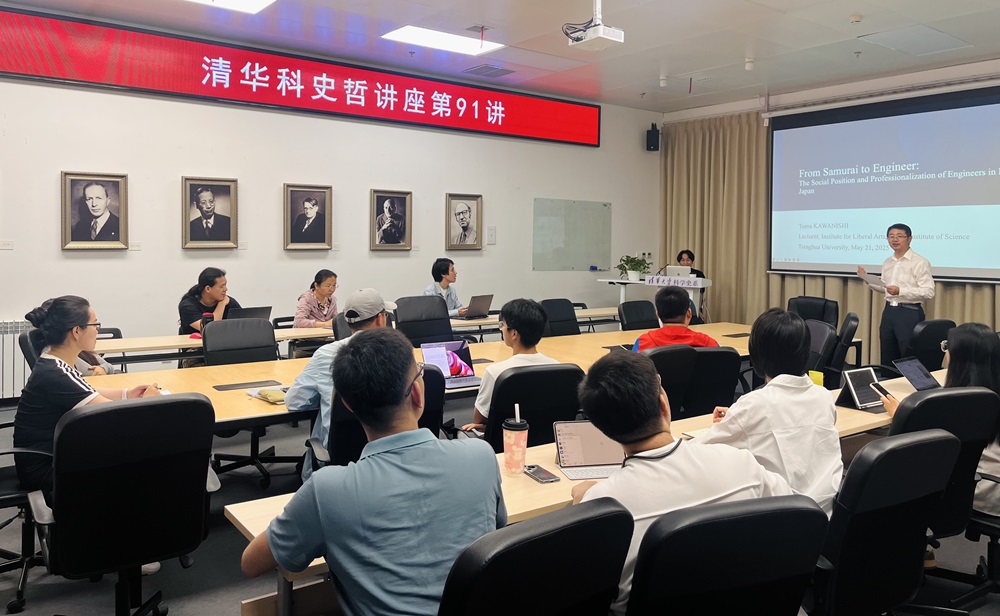
This lecture explores the emergence and professionalization of the engineering community in Meiji-period Japan, placing this social process within the broader context of modernization and the selection of Western models. It focuses on the establishment of the Imperial College of Engineering under the strong influence of Scotland, its tradition of engineering education, and the crucial role played by foreign advisors in this endeavor. Through case studies of several important Meiji engineers, the lecture traces how engineering in Meiji Japan became not only a profession but also a new avenue for social mobility and nation-building.
At the beginning of the lecture, Hexi first introduced the historical background of Japan's modernization reforms during the Meiji period. A series of historical events such as the Opium War, the arrival of the Black Ships, the Anglo-Satsuma War, and the Shimonoseki War made the Japanese increasingly realize, under the pressure of the expansion of Western civilization, that the policy of expelling foreigners was unsustainable. Eventually, they launched the Boshin War to overthrow the shogunate and resolutely embarked on the path of learning from the West to build a modern country and develop science and technology. However, along with this modernization transformation, the feudal system collapsed, and the samurai class lost their social privileges, stipends, and the lords they had served, falling into a situation of large-scale unemployment. They had to explore ways to adapt.
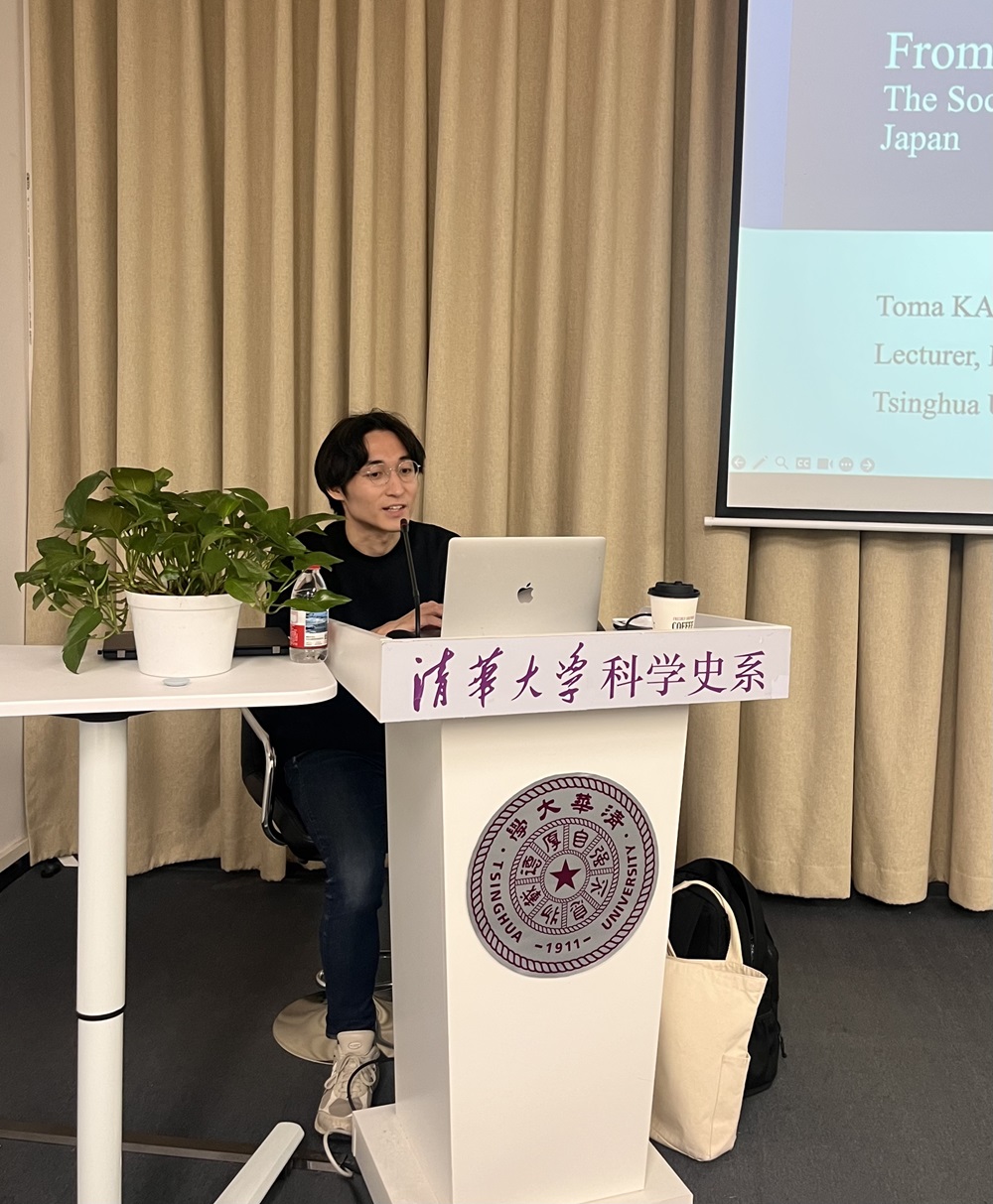
Subsequently, Hexi reviewed the Western models that Japan had chosen for national construction since embarking on the path of modernization. As the academic tradition of Confucianism shifted towards Western-style modern university education, Guido Verbeck, a Western advisor to the Meiji government, exerted a significant influence on Japan's selection of development models for different disciplines. In the field of engineering, he even suggested taking Britain as a model. In the early days of the Meiji Restoration, due to the similarity in geographical conditions and the alliance foundation of the Satsuma-Chōshū Alliance, Britain had long been Japan's development model until it later turned to Germany.
During this period, Scotland had a particularly profound influence on the development of engineering in Japan, which can be traced back to the long-term friendly ties between the Chōshū Domain and Scotland. Introduced by Scottish merchant Hugh Matheson, five low-ranking Chōshū samurai secretly went to Britain in 1863 to study engineering privately, hoping to innovate the navy through shipbuilding technology. Among these five were Itō Hirobumi, Yamao Yōzō, and other key figures in the later Meiji government. They actively promoted the development of Japanese engineering education with Scotland as a model, including the establishment of the Kōbu Daigakkō (College of Engineering) and the appointment of Henry Dyer as a consultant to the college. At that time, even in the West, engineering education was not well-developed. Dyer took Japan as a testing ground, used Scottish engineering education as a template, and drew on the strengths of various sources to create an engineering education system that gained worldwide reputation.
With the support of historical data on higher education, Hexi pointed out that among the formation of the engineer group in Meiji Japan, the former samurai class occupied the main body. Confucian ideas of eagerness to learn and self-help, the cultural capital from the education of Confucian classics, and the relatively close attitude of samurai towards craftsmanship during the Edo period all helped Japanese samurai adapt to modern engineering education. Hexi believes that engineering education became a good strategy for the former samurai class to restore their social status, because public engineering education, which waived tuition fees and provided scholarship subsidies, had a relatively light economic burden, and graduation from engineering education ensured government positions. Subsequently, Hexi introduced several representative figures of this social trajectory, such as Kingo Tatsuno and Ichisuke Fujioka. These former samurai engineers led the modernization of Meiji Japan and became the new social elites.
Finally, Hexi emphasized that the transformation of warriors into engineers confirms the often overlooked continuity in the Meiji Restoration, and believes that Japan's enduring sense of marginality promoted its opportunistic selection and adaptation of models.
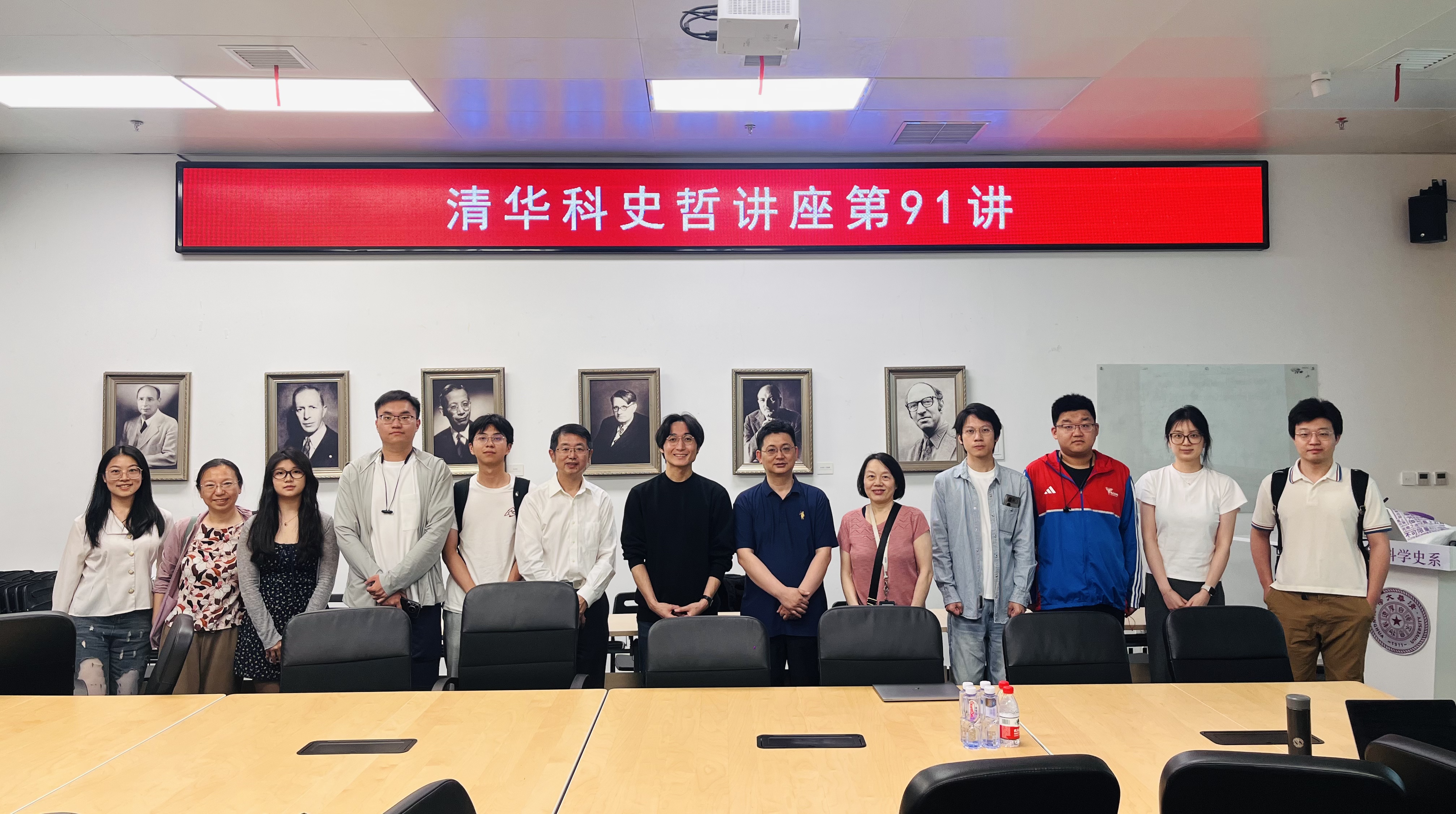
Subsequently, teachers and students present raised questions to Kasai and engaged in a lively discussion on issues such as the specific causal mechanisms behind the high proportion of samurai students in engineering education during the Meiji period, the vastly different attitudes of Confucian scholars towards industry in modern China and Japan, whether Japanese samurai advocated meritocracy, which ultimately led Japan to turn to Germany as a model, and the genetic sequence of engineering technology and technocracy in Meiji Japan.
Written by: Zhang Xiulin
Reviewed by: Wang Wei