

On the afternoon of March 28, 2025, the 87th lecture of the Tsinghua History and Philosophy of Science Lecture Series was held in Room B206 of the Humanities Building. This lecture featured Professor Fan Ruiping from the Department of Public and International Affairs at City University of Hong Kong as the keynote speaker. His lecture was titled "Death, Resurrection, and Human Relations: A Philosophical Exploration of Human Cryopreservation and Resuscitation Technology." The lecture was chaired by Professor Wu Guosheng from the Department of History of Science at Tsinghua University.
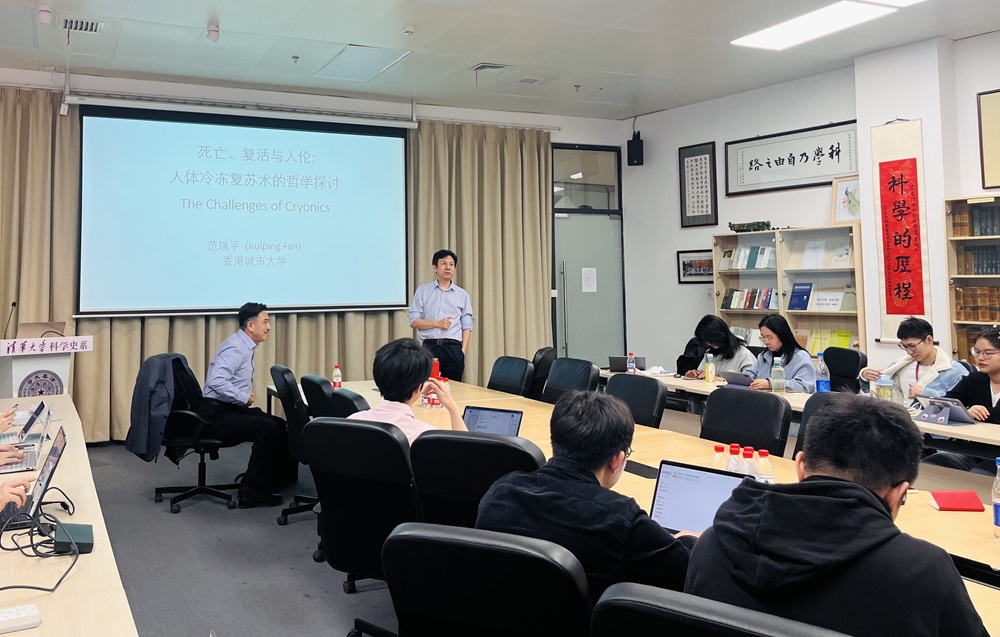
First, Professor Fan Ruiping provided an introduction to "cryonics" (human cryopreservation technology), primarily covering which companies currently offer this service, the costs involved, and the specific procedures. Additionally, he compared this technology with "hibernation," noting that "hibernation is not death but rather a state of minimal activity and very slow metabolic suppression," thereby indicating that human cryopreservation differs from hibernation. On this basis, Professor Fan Ruiping also summarized current opposing and supporting arguments regarding "human cryopreservation technology." For instance, "human cryopreservation technology" may alter the concept of death and could potentially lead people into the temptation of premature euthanasia; however, it also generates potential benefits for society and promotes the development of scientific knowledge and technology.
Next, Professor Fan introduced the case of the famous scholar Li Zehou's "will to freeze his head," stating: "Mr. Li Zehou's desire to undergo human cryopreservation was not for the purpose of resurrection, but rather to prove whether culture influences the brain. Several centuries from now, whether traces of Chinese culture can be discovered from his brain, thereby proving his theory of sedimentation." Regarding whether Li Zehou's final wish can be realized, Professor Fan Ruiping believed that consideration needs to be given from two aspects: first, does culture influence brain structure? This would be a broad and generalized conclusion about the relationship between culture and the brain. Second, does Chinese culture sediment in the brain of Mr. Li as an individual? This is a more specific and narrow question that requires comparing his brain with those of individuals from different backgrounds under controlled conditions, understanding his life experiences and the relationship between these experiences and Chinese culture, and also explaining how his unique experiences, thoughts, and interactions with Chinese culture shaped neural structures and integration.
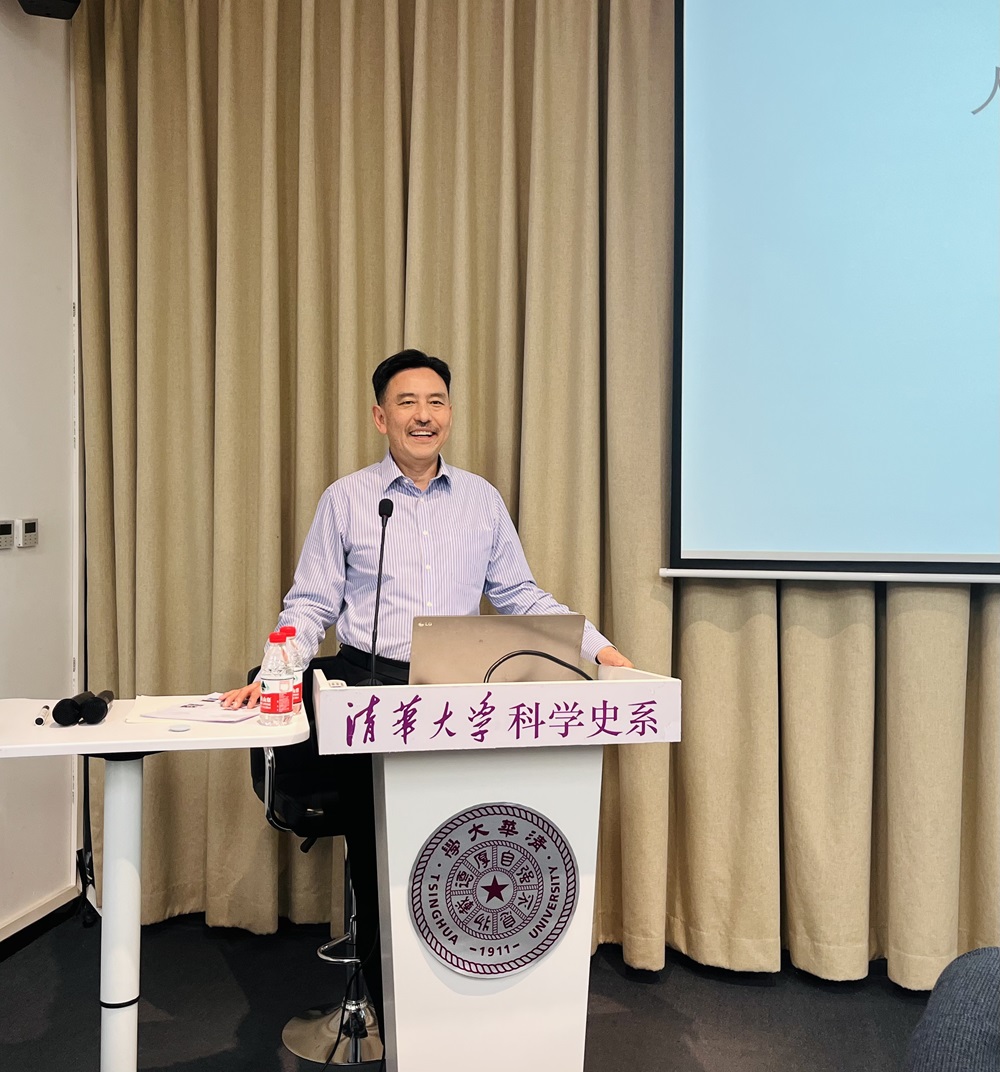
Subsequently, Professor Fan Ruiping reflected on this theme from an ethical perspective. Should society completely prohibit "human cryopreservation technology"? More specifically, how should middle-class families decide which members to undergo cryopreservation? This technology also impacts the ethical views of certain religions. For Christianity, it involves the question of where the "soul" resides; for Buddhism, it concerns issues of reincarnation and personal identity. "Human cryopreservation technology" is also related to questions of age and the order of life. Furthermore, Professor Fan Ruiping explored the problems brought by new technologies within Confucian bioethics, which is more accessible to Chinese people. In the Confucian ethical foundation, the continuity of shared time and space is the condition for family and love to occur. "Human cryopreservation technology" and similar cosmic space-time travel, to some extent, disrupt the clear spatiotemporal order of the family, causing individuals to no longer live within the continuous spectrum of life, death, and intergenerational continuity. Therefore, the ethical issues involved in new technologies require particularly deep reflection.
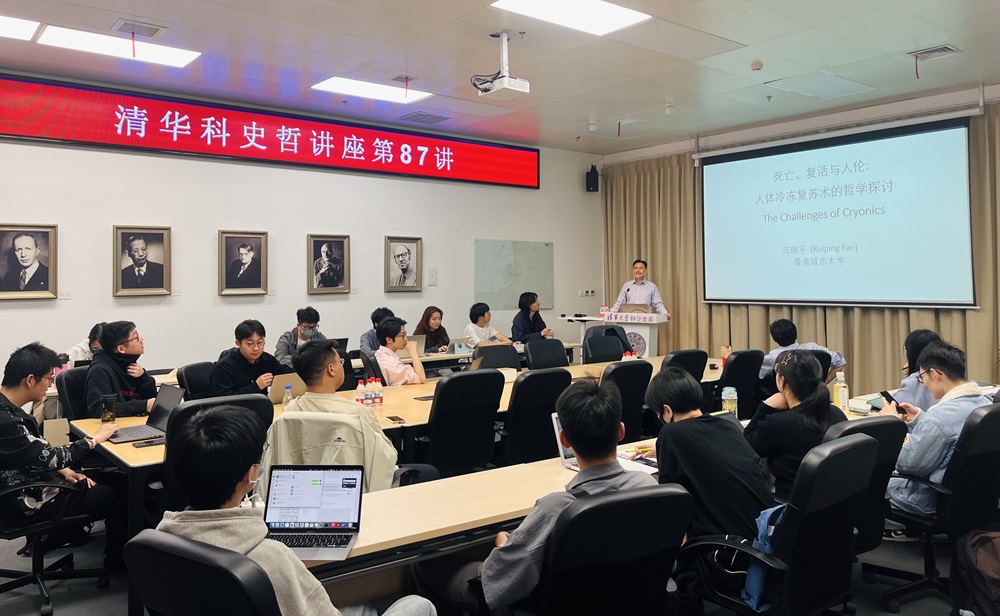
Following the main presentation, faculty and students in attendance actively raised questions. Professor Wu Guosheng engaged in dialogue with the speaker on two issues: "the definition of resurrection from death" and "the significance of extreme life experiences." Some students also asked questions based on their understanding of "human cryopreservation" combined with relevant materials they had previously read. Professor Fan Ruiping responded to each question, engaging in highly inspiring exchanges with the audience, resulting in substantial gains for all.
Author: Zhang Zhimin
Reviewer: Yan Bichen