

On March 6, 2025, the 86th lecture of the Tsinghua History and Philosophy of Science Lecture Series was held as scheduled in Room B206 of the Humanities Building. This lecture was chaired by Professor Shen Yubin from the Department of History of Science, with Dr. Wang Xiaona, an Early Career Fellow at the Centre for the Study of the Renaissance at the University of Warwick, as the speaker. The title of her presentation was "Re-examining Parisian Astronomical Standards and the Controversy over the Shape of the Earth in the 1730s."
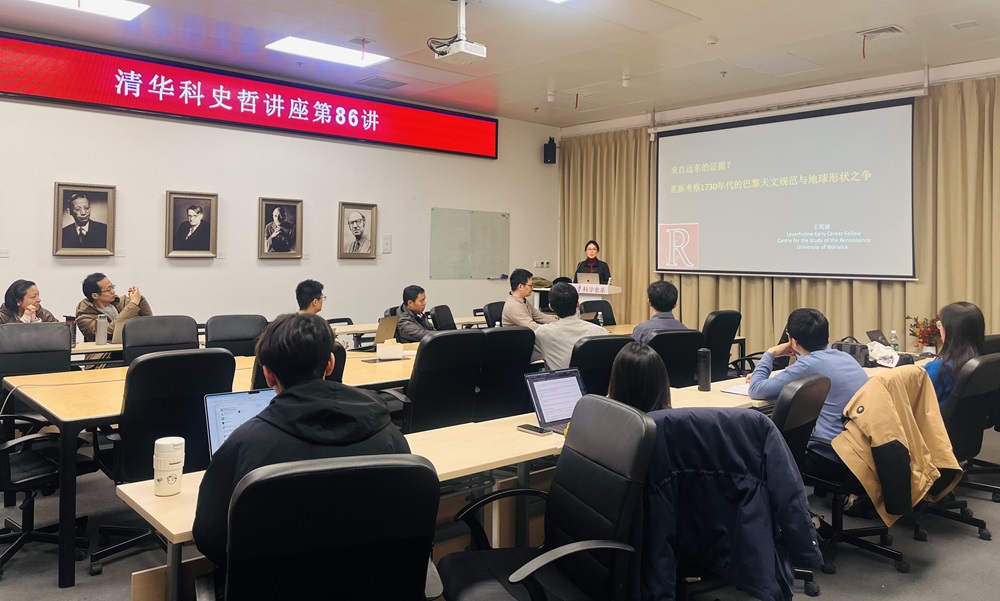
As indicated by the title, Dr. Wang began with the background of the story: in the 1730s, the "ends of the earth" expeditions organized by the French Academy of Sciences—namely, measuring the actual length of one degree along the meridian at the equator in Peru and in Lapland—occupied an important position in the history of science. These measurement results empirically confirmed that the Earth was an oblate spheroid rather than a prolate spheroid. Due to the slow progress and near failure of the Peru expedition led by Louis Godin, the Lapland expedition led by the young mathematician of the French Academy of Sciences, Pierre Louis Maupertuis (1698–1759), became a crucial role. Dr. Wang noted that, however, despite Maupertuis and his team's measurement results being carefully prepared and packaged—including the use of high-precision astronomical instruments manufactured in London (the Graham zenith sector), theoretical endorsement from Newton and his supporters, and the public appeal of the harsh Lapland environment—the Academy and Observatory, represented by the Cassini family, still stubbornly resisted the northern measurement data.
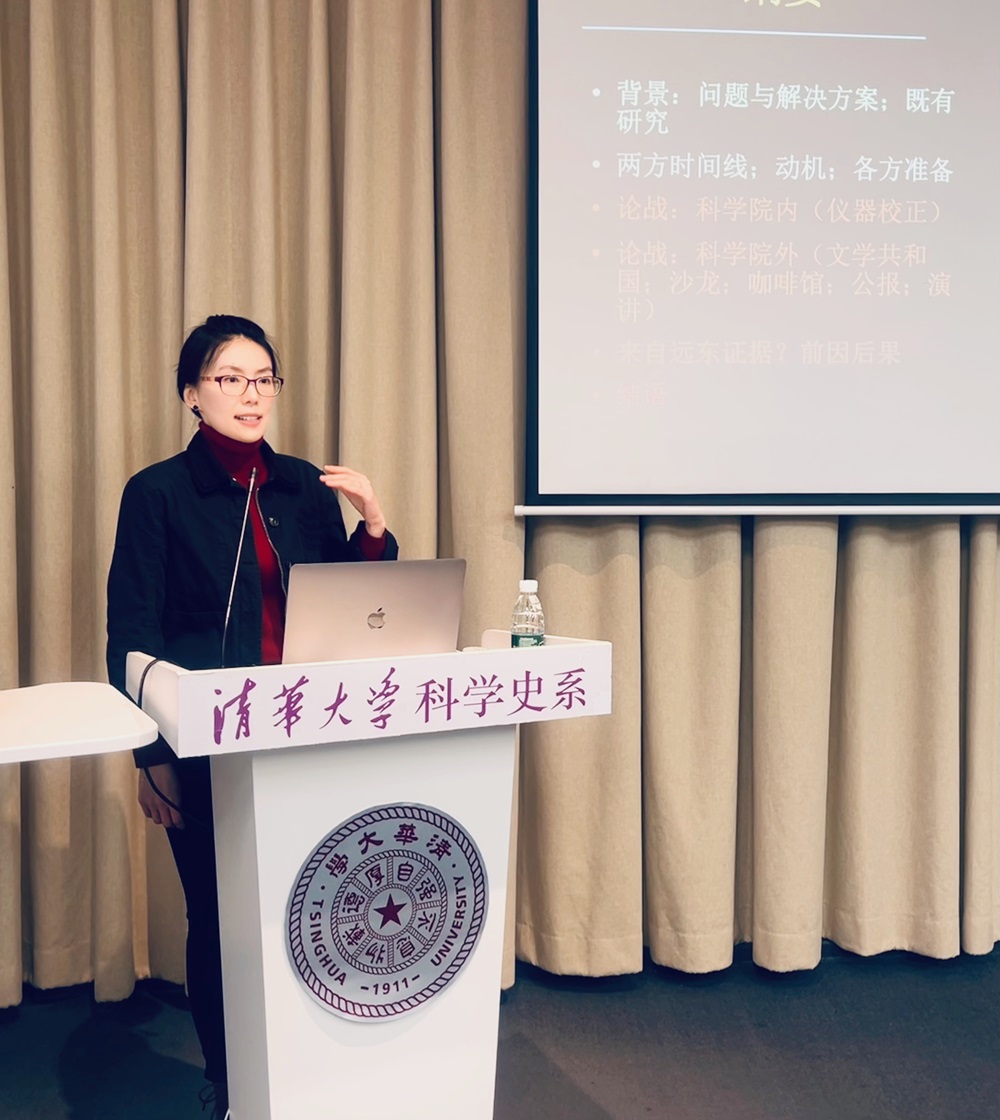
Next, Dr. Wang analyzed the reasons for this resistance, examining the fierce struggle between the Cassini faction and the Maupertuis faction from both intra-academic and extra-academic perspectives. The intra-academic debate focused on instrument calibration and inversion, while the extra-academic war extended to the Republic of Letters, salons, cafés, and gazettes. Dr. Wang then proposed a neglected Eurasian perspective on this story: the decisive factor in whether the northern data would be accepted was not these careful strategic deployments and polemics from various parties, but rather the collective empiricism of astronomical observation established by the Cassini family since the founding of the Observatory. The astronomical and geographical projects conducted by French missionaries in the Far East serve as exemplary instances of this collective empiricism.
Finally, Dr. Wang concluded that if for Maupertuis, the Lapland expedition was like Archimedes' lever—a place that the aging Cassini II could not reach—then for Cassini, the crucial "trump card" was the experience from the Far East. Dr. Wang concluded by elucidating how this story can be understood through different philosophical and sociological frameworks of science.
Following the main presentation, faculty members including Wang Zheran, Jiang Che, Liu Niankai, Shen Yubin, and Sun Chengsheng, along with graduate students from the department, raised discussion questions concerning topics such as the details of instrument inversion and the development of astronomy. Dr. Wang responded to each question, providing much inspiration and new perspectives for all present.
Author: Wang Xiaona